From the Classroom to the Page: Talking Sensory Stories with Janice Milusich
January 18th, 2026
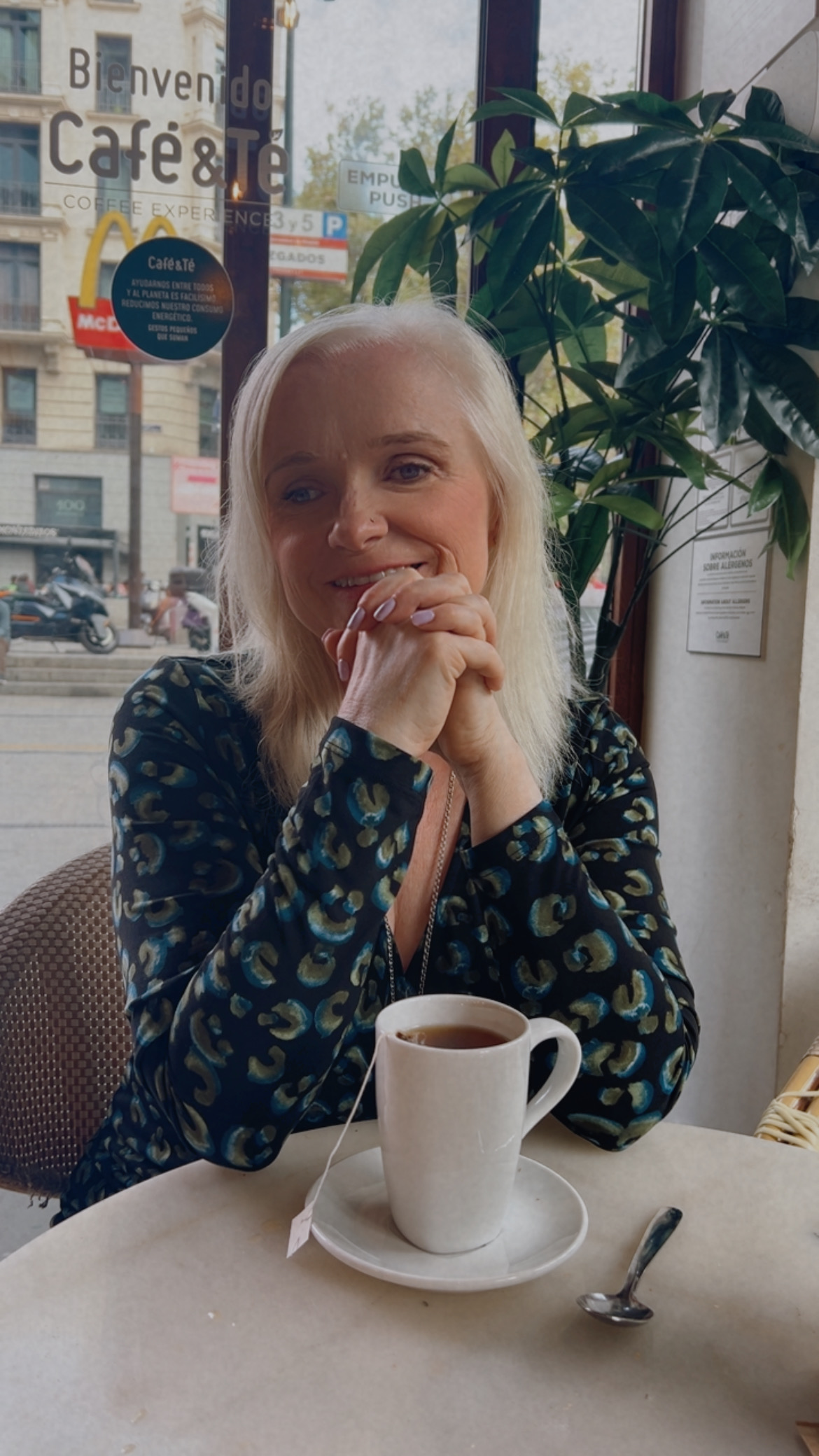
I met Janice Milusich through the vast web of online connections. We quickly discovered we share quite a few things in common. We both attended Hunter College in New York City. We also grew up in New York, are teachers, and share a deep love of storybooks.
I felt an immediate sense of respect for Jan. Her calm presence, her dedication to her students, and the care she brings to both teaching and writing were evident from the start.
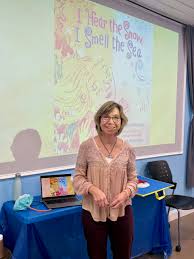
I had the pleasure of interviewing Jan, and she generously offered a reading of her beautiful picture book, “I Hear the Snow, I Smell the Sea” inside the group, Adventures in Albinism. It was shared with great care and attentiveness, and our community truly appreciated the experience.
About Janice Milusich

Janice Milusich is a children’s author and a Teacher of Students with Visual Impairments who works with preschool-aged children. Her students and their experiences often inspire her writing. She is a graduate of Stony Brook’s Children’s Literature Fellowship and Renee LaTulippe’s Lyrical Lab.
Her newest picture book, “I Hear the Snow, I Smell the Sea", illustrated by Chris Raschka and published by Penguin Random House, was released on October 7, 2025. Her other works include the picture book Off Go Their Engines, Off Go Their Lights and the chapter book series Cleo’s Big Ideas. Janice’s writing has also appeared in Spider and Muse magazines.
For more information, visit www.janmilusich.com or follow Janice on Instagram, Facebook, or Bluesky.
Where Teaching and Storytelling Meet
1. Can you tell us a little about yourself and what first inspired you to become a Teacher of Students with Visual Impairments (TVI)?
As a child I was an anxious student, but when a teacher tasked me to help a peer who was having difficulty with an activity we were involved in I discovered the shared magic that happens when you support a learner. That experience led me toward a career in education. Through high school and college, I volunteered and worked in respite and recreational programs with children and adults with disabilities, one of which was HKNC, Helen Keller National Center. There I learned to communicate with residents attending the center via American Sign Language. I began learning braille and was fascinated with the diverse ways to engage and communicate. My time at HKNC inspired me to get my masters in teaching children with visual impairment and blindness.
2. What do you love most about working with preschool children who are visually impaired? What moments bring you the most joy?
Everyone learns best when involved in play, but often as students climb the grade ladder time spent in play shrinks. But in preschool play is an essential ingredient best mixed with laughter and a sprinkling of silliness. In a way I get paid to play, which, I have to say, is a great job perk. The moments that give me the most joy happen as a result of a student accomplishing a task that had previously been a challenge. Witnessing their expressions of joy and confidence are immensely gratifying.
3. What are some of the biggest challenges you face as a TVI, especially with very young learners?
Communication can be a big challenge. Often when I have young student entering the school setting who isn’t verbal, or is just beginning to learn alternative methods of communication, frustration occurs frequently until a path for shared communication is found. Another challenge is tactile sensitivity. It takes time and patience to earn a child’s trust to explore the world using their hands. Often children prefer to use their feet first as feet are further from their body. But when trust is established, little by little children will often attempt to explore with hand under hand assistance, their hand on top of mine, as it allows them to have the autonomy to explore as much or as little as they’re comfortable with.
4. What sparked the idea to write your beautiful book, I Hear the Snow, I Smell the Sea? Was there a specific moment, child, or memory that inspired the story?
The idea for the story that became “I Hear the Snow, I Smell the Sea" came about from my many experiences working as a teacher for the visually impaired and blind. For the past 17 years I’ve worked with preschool aged children facilitating their exploration, working to scaffold their growing concept development, encouraging their use of compensatory skills including tactual discrimination, identification and recognition, auditory identification, localization and differentiation, while supporting their self-advocacy skills within the classroom and the school setting.
Out of all the grade levels, preschool celebrates the exploration of seasonal changes. While engaged in activities in the classroom, or individually with a child, I encourage my students to explore and question. We share our perceptions, and wonder is always a part of those experiences. Some of my favorite teaching moments occur when my students and their peers work together and learn from each other's differing perspectives. The sharing of a different sensorial perspective is what I hoped to capture in writing this story.

5. What part of the writing process was the most challenging for you? And what part felt the most meaningful or joyful?
For me, the most worrisome part about writing this story was changing the POV from third person to first person. My immediate reaction when I was asked to do make that change by my editor, Anne Schwartz, was to reach out to a former student of mine, a writer and poet who’d been my sensitivity reader for the third person version. I wanted to know what she thought about me, a sighted teacher for the visually impaired, writing the story in first person. Her support of my writing the story as an experienced TVI was important to me and all I needed to face the challenge. The most joyful part of the writing process, I find, is the initial idea that sparks a story, and the contemplation of a character’s backstory, but from then on the crafting of a story is often fraught with stops and starts due to second guesses and multiple revisions.
6. Children’s books carry such emotional weight. What feelings or messages did you hope children—especially those with low vision or blindness—would take from your book.
I hope readers will take away a greater appreciation for what their senses of touch, smell, hearing and taste have to offer to their perception of the environment and that visually impaired and blind children will find themselves represented in a way that empowers their understanding of and exploration of the world around them.
7. Your book highlights sensory experiences so beautifully. How do you see sensory exploration supporting early learning for children with visual impairments?
Sensory exploration is vital to a visually impaired child’s concept development and understanding of the world around them. In I Hear the Snow, I Smell the Sea I wanted to show how auditory, tactile, olfactory and gustatory exploration encourages locomotion, spatial location, beginning orientation and mobility skills, gross and fine motor skills, proprioception or the sense of body position in space, kinesthetic perception or the sense of the movement of the body in space, perceptual development, communication, social skills, tactile discrimination and recognition, and communication skills.
8. Looking ahead, what do you imagine for your future career or creative work? Are there more books, projects, or dreams you hope to pursue?
Since my picture book was released, my writing time has been curtailed, and I haven’t quite found a balance between work, promotion and writing, but I am in the process of writing a story about a young blind boy navigating the changes that going to school creates in his day to night schedule.
Janice Milusich brings a rare and valuable perspective to children’s literature, blending her deep experience as a Teacher of Students with Visual Impairments with a storyteller’s sensitivity to language, rhythm, and emotion. Her work reflects what happens when classroom insight and creative writing meet, offering stories that honor sensory experience, inclusion, and curiosity. We look forward to reading what comes next.
Thank you, Jan, for your thoughtful contributions to children’s literature and to the work you do every day supporting children with low vision in school!